Home One-to-One Lessons
Lessons at home suit families who want the tutor to see the actual exercise book and the actual homework folder, not a scanned copy on screen.
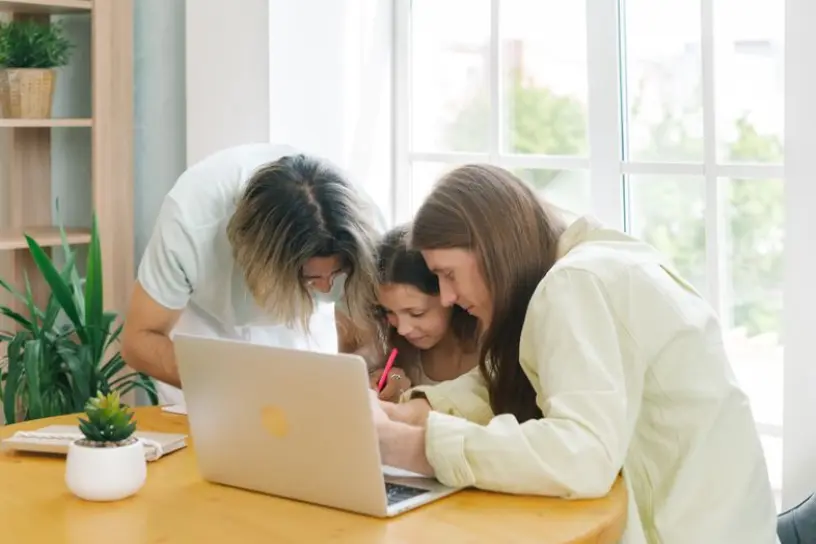
What a home lesson actually looks like
Our tutor arrives at your door with a folder of their own material and sits down at the same table your child does homework on. That is the whole idea. In a home lesson we can see the actual exercise book, the actual homework folder and the marking the class teacher left in red pen last Thursday. A photographed page sent by email tells us far less than a book we can flick back through.
Lessons are one-to-one, so the time is spent on one pupil and one set of gaps. We teach maths, English and science, and we prepare pupils for 11+ entrance assessments, GCSE and A-level. The pupils we see run from age 7 to 18, which means a Primary 5 child who cannot yet line up column subtraction one evening and a sixth-former avoiding a particular A-level chemistry topic the next. If your child is halfway through a topic and the class has already moved on, we can pick it up from the page where it went wrong rather than starting the whole unit again.
Planning happens between sessions, not on the doorstep. After each lesson the tutor writes up what was covered, what was shaky and what needs another pass, and those notes feed the progress reports parents receive.
Who home lessons suit, and who they do not
Usually a good fit
- Younger pupils who settle faster in their own space than in a strange room, and who will happily hand over their own books.
- Pupils with a heavy week of after-school clubs, where adding a journey across Edinburgh at 5pm is the thing that makes tutoring fall apart by week three.
- Families with two children close in age, where one visit can cover two back-to-back sessions.
- Children who find a screen distracting and work better with a pencil, a ruler and someone sitting beside them.
Probably the wrong choice
- Homes where a clear table and a quiet half hour are genuinely hard to arrange at the times a tutor is free, since a lesson interrupted every ten minutes helps nobody.
- Pupils who work noticeably better with a shared screen, a digital whiteboard and diagrams built up live. Online one-to-one lessons do that better than a kitchen table can.
- Anyone far outside the areas we travel to. Ask us and you will get a straight answer rather than a booking.
How it works, step by step
The first contact is usually a phone call or an email with the year group, the subject and a sentence about what is worrying you. From there the sequence is fairly fixed.
- 1. A short conversation. We ask what the school has said, what the last report showed and what a good outcome in June would look like. Vague goals produce vague lessons.
- 2. Tutor match. We pair your child with a qualified tutor who knows the specification or the entrance format in question, and who has the right evening free.
- 3. First lesson, mostly diagnostic. The tutor works through real material from the book and the folder, watching where the reasoning breaks rather than only marking the answer wrong.
- 4. A regular slot. Same evening each week where possible, because a predictable rhythm is what keeps a term of tutoring going through a wet February.
- 5. Notes after every session, so you are not relying on a teenager's account of what happened.
- 6. Progress reports for parents at the points we agree at the start, plus a longer review before exam season or before a decision on continuing.
What to have ready before we arrive
Nothing needs buying. The useful things are already in the school bag, and gathering them before the first lesson saves about twenty minutes of the first session. Put out the exercise book, the homework folder, the most recent marked test or assessment, and the timetable. If your child is working towards GCSE or A-level, the specification or the reading list from the teacher is worth having to hand. For 11+ preparation, any past paper the school or the test provider has released is gold.
On the practical side, a table with decent light and siblings occupied somewhere else makes a real difference. For primary-age pupils we ask that an adult is in the house, though not necessarily in the room. Teenagers usually work better without a parent listening at the door, and we will say so if that is what we see.
What affects the timing and the cost
Fees are on request rather than published, because the quote depends on things we can only weigh up once we know your situation. The level matters: primary numeracy support and A-level physics are not the same preparation, and neither is the marking load afterwards. The number of subjects matters too. A pupil taking maths and science in one visit is a different booking from a weekly English slot, and we price them separately so you are not paying for padding.
Frequency and block length shift the figure, and so does travel. A lesson in Marchmont at 4pm on a Tuesday is easier for us to staff than one in a outlying village at 7pm. Demand moves things as well: from March to May the exam diet fills evenings quickly, and the families who booked in January get the slots they wanted. We will never quote a number on this page that turns out to be wrong when you call. Ask, and you will get the real one.
On timing, we confirm what is available in your subject and your area when you book, along with the hours the tutor can offer. We would rather say "nothing on a Wednesday until after Easter" than promise a slot we cannot fill.
Home lessons against the alternatives
Against helping your child yourself
Plenty of parents can do the maths. The difficulty is the relationship. A child who will not accept an explanation from mum will often take exactly the same explanation from a stranger who is not there at breakfast. There is also the small matter of knowing which method the school is using this year, since a confident but outdated approach creates marking problems later.
Against online lessons
Online suits some pupils well and we teach both ways. Home lessons win where the paper itself is the problem: handwriting that has collapsed, a folder in chaos, a child who says they have finished when the page is blank. Seeing the book settles those questions in minutes.
Against group classes
A group of twelve moving at the pace of the middle is not one-to-one tuition, whatever the label says. Weaker topics get skipped because nobody wants to hold up the room. One-to-one means we can spend an entire session on the one thing that keeps going wrong.
Against waiting a term to see
Doing nothing is a choice with a cost. Gaps in early reading or number work tend to widen quietly, and by the time a report names the problem there is usually more to rebuild than there would have been in October.
Questions parents ask
Do I need to sit in on the lesson?
No. For younger pupils we ask that an adult is at home, and tutors will call you in at the end if something needs flagging. For teenagers, the room is usually better without an audience.
Are the tutors checked?
All our tutors are DBS-checked and qualified teachers or subject specialists. The same tutors teach our online one-to-one lessons, so if your circumstances change the relationship does not have to start again.
My child needs help in more than one subject. Can that work at home?
Often, yes. Maths and science pair naturally in a single visit, and English can sit alongside either. We will tell you honestly if the combination is too much for one weekly slot.
How do progress reports work?
Tutors write up every session, and you receive a fuller written report for parents at the points agreed at the start, typically around a review point or before exams. Reports describe what has been covered and what still needs work, not just a score.
What does it cost, and when could we start?
Fees are on request. Call us on +44 131 4752394 or email [email protected] with the year group and subject, and we will confirm the fee, the tutor's available hours and the earliest start date for your area.