Maths Tuition
Weekly maths lessons that start from what your child can already do, then close the gaps that hold them back in class, in homework and in the exam hall.
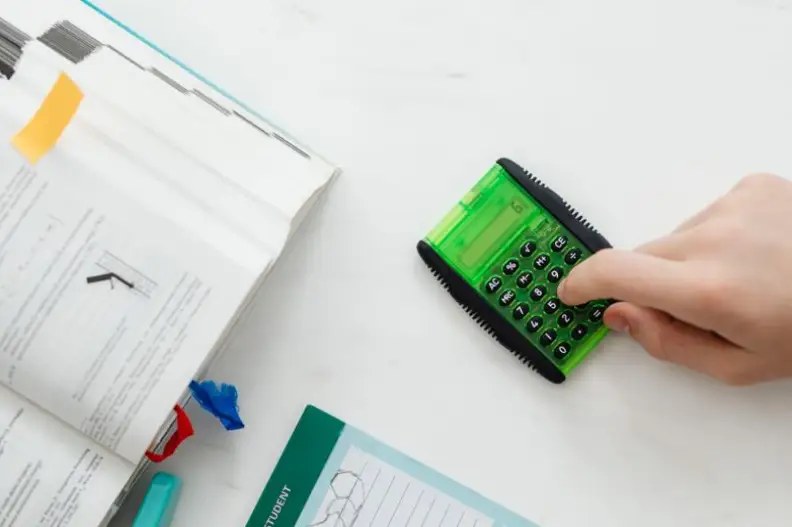
What maths tuition looks like here
Maths tuition at Rowan & Reed is a weekly one-to-one lesson for a pupil aged 7 to 18, online or at home. We teach the maths on the school timetable first, then the maths underneath it: number facts, fractions, algebra, geometry, graphs and probability. For older pupils the work follows the GCSE or A-level specification, including the tier and the exam papers your child will sit. Lessons are taught by DBS-checked qualified tutors, and parents receive progress reports.
Maths gaps are cumulative. A pupil who missed equivalent fractions in Year 5 can meet the same idea again in Year 8 algebra and again in a GCSE ratio question, each time with less confidence. Our starting point is what your child can already do. We ask for a recent school test, homework book or mock paper, then the tutor works through it with your child to find the first point where the method breaks. The lesson plan is built from that point, not from a generic scheme.
You will not hear us promise a grade. We plan backwards from the exam board specification, teach the method, then make your child use it on unfamiliar questions. That is the part most home worksheets miss.
Who maths tuition suits, and who it does not
One-to-one maths suits pupils who need the pace changed. That includes a Year 4 pupil who freezes on times tables, a Year 9 pupil whose algebra collapses when letters appear on both sides, and a Year 13 pupil who knows the A-level content but loses marks on proof or calculus setup. It also suits 11+ candidates who need timed reasoning practice, and GCSE pupils working towards a grade 5 or a grade 8; the method is the same, the questions and the pace are not.
It does not suit every family. If your child needs a large social group to stay motivated, a small group class may be a better fit. If you want a tutor to supervise homework every night, that is a different service. If your child is already meeting their targets and enjoys maths, a weekly one-to-one lesson may be more than you need; a short block before an exam, or a study skills session, could be enough. We will say so at the first conversation if that is what we think.
We also teach pupils who have lost confidence after a bad test or a change of teacher. The first job there is not a worksheet. It is a conversation about what felt hard, followed by a problem your child can solve. Small wins are part of the method, not a reward bolted on at the end.
How the lessons work, step by step
Before the first lesson
We ask for the school year group, the exam board if there is one, and any recent marked work. A photo of a test page is enough. If your child has a support plan or access arrangements, tell us; we will use the same reading or timing support in lessons where it helps.
The first lesson
The tutor starts with a short diagnostic, usually by talking through the work your child brought and asking them to solve two or three problems aloud. Hearing the reasoning matters more than seeing the final answer. By the end of the lesson the tutor should know which method is secure, which is half-learned and which is missing. You get a clear summary, not a score out of ten.
The weekly cycle
Each lesson follows a rhythm: a quick retrieval starter on last week's method, direct teaching of the new step, guided practice with the tutor, then independent questions while the tutor watches. We finish with an exam-style question so your child has to choose the method without a prompt. Homework is short and targeted. A few careful answers are worth more than a page of rushed ones.
Exam preparation
For 11+, GCSE and A-level, the lessons move onto timing, command words and mark schemes. A pupil may understand a topic and still lose marks because they did not show a substitution, rounded too early or misread "hence". We practise full questions under time, then mark them together. The progress report tells you which papers and topics we have covered.
What to prepare for home and online lessons
For home lessons, have a table, good light, the school exercise book, a pen and pencil, a ruler, and a calculator if your child is at GCSE or above. A recent test paper is more useful than a clean textbook. Put phones away, including the one that keeps buzzing. We bring the planning, the resources and the past paper questions.
For online lessons, a laptop or tablet with a working camera and microphone, a stable internet connection, and paper to write on. A headset helps if the house is busy. We use a shared screen or an online whiteboard so your child can show their working; the tutor can see the page and correct the method as it happens. If the connection drops, the lesson continues on audio where possible and we sort the rest at the next booking.
Tell us about the school's scheme of work and the exam board. If your child is in Year 7 and the class is on fractions, we will not jump to algebra because it looks impressive. If the school has set a mock for the last week of the summer term, we will work towards that date. A photo of the knowledge organiser or the term's topic list saves time.
What affects timing and price
We do not publish a single rate because the variables are real. The year group matters: primary maths, GCSE foundation, GCSE higher and A-level are different preparations. The exam board and tier matter, because the question style and the mark scheme differ. The number of lessons before the exam matters, and so does whether the lessons are online or at home, since home lessons involve a tutor travelling to you. Frequency is your choice: weekly is the usual pattern, and some families book twice a week in the weeks before an exam. Lesson times are confirmed when you book, and the fee is on request at that point.
Availability changes with the school calendar. September and the weeks after October half term are busy; the spring term before GCSE mocks is busier still. If you are planning 11+ preparation, starting in Year 4 or Year 5 gives more room to work on reasoning speed than a last-minute block in August. That is a calendar fact, not a promise of a place or a result.
How one-to-one maths compares with the alternatives
A worksheet pack can give more practice. It cannot tell you why the answer went wrong. A large group class can be cheaper per hour, but the teacher has to teach the middle of the room; a pupil who is lost at step two will still be lost at step seven. An app can drill times tables well, and we use that kind of practice between lessons. It cannot make a child explain a proof or choose between two methods under exam pressure.
Doing nothing is also a choice. Some pupils catch up after a change of teacher or a growth spurt in confidence. Others keep meeting the same gap in a new topic, year after year. A short diagnostic block can tell you which situation you are in. If your child needs only practice, we will say so and keep the plan light. If the gap is conceptual, weekly one-to-one lessons give the tutor time to close it and give you a progress report you can act on.
Questions parents ask about maths tuition
Do you follow my child's school scheme of work?
Yes, where the school provides one. We ask for the topic list or knowledge organiser and teach in the same order, adding the prerequisite steps the class may have skipped. For GCSE and A-level we follow the exam board specification.
Can lessons switch between online and at home?
Yes. Some families use online lessons in term time and home lessons when a child needs help organising written work. Tell us at booking so the tutor can plan the room and the resources.
How often will I receive a progress report?
We provide progress reports for parents. The reporting rhythm is agreed with your tutor at the start, and reports cover what has been taught, what is secure and what comes next. If you want a report before a parents' evening, ask and we will plan the lesson evidence around it.
What if my child is preparing for 11+ or A-level maths?
We cover both. 11+ lessons include timed reasoning and written arithmetic; A-level lessons include pure, mechanics and statistics depending on the papers your child sits. The first lesson checks the level before we build a plan.
Do you teach pupils aged 7?
Yes. Maths tuition runs for pupils aged 7 to 18. For younger pupils, lessons are usually shorter in scope and heavy on number sense, but the one-to-one format is the same.