Online One-to-One Lessons
Online lessons keep the full attention of one tutor on one pupil, with the work saved after each session so revision notes are never lost.
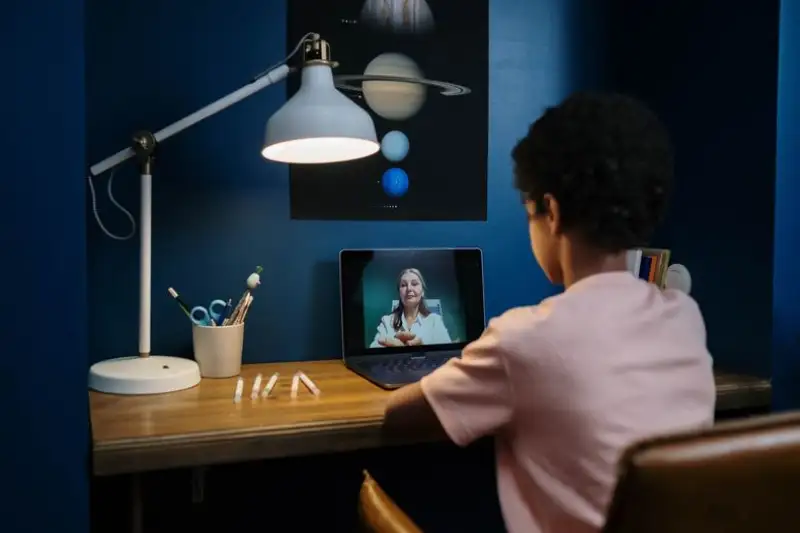
One pupil and one tutor. That is the setup for an online lesson with us. The tutor sees your child's working as it happens, corrects the method at the point it goes wrong, and saves the board afterwards so the lesson does not vanish when the laptop closes.
This page explains how online one-to-one lessons work at Rowan & Reed Tuition, who they suit, what to have ready, and what changes the fee and the waiting time. It is for parents of pupils aged 7 to 18 who want private tuition in maths, English and science.
What an online lesson actually looks like
We use a video call with a shared whiteboard. Your child talks through a problem while writing or typing on the board. The tutor can see the page, add a diagram, drop in a past paper question, or write a model answer beside the pupil's work.
Every tutor is DBS-checked and qualified. We match pupils with a tutor who knows the relevant exam board, or for 11+ work, the format used by the target school. Lessons are one-to-one, so the pace comes from the pupil.
The work does not disappear
After each session we save the whiteboard and any worked examples as a file you can keep. That matters for revision. A pupil who solves a tricky algebra question in October should not have to reconstruct the method in May. The saved notes sit alongside the school exercise book.
A lesson has a shape
Most lessons start with a short check on the last topic. Then we teach a new step, watch the pupil try it, and finish with an exam-style question. The tutor writes the next step into the saved notes. You do not need to sit in. For younger pupils, a parent can stay nearby for the first session.
Who online lessons suit, and who they do not
Online tuition works for pupils who can focus on a screen with a person talking back. It helps families who cannot fit a commute around school and work, or a wet Tuesday in February. It is not right for every child.
- Pupils who are comfortable using a keyboard or tablet, with a parent nearby for the first few sessions if needed.
- Families with a busy after-school timetable who want a lesson without a drive across town.
- Students preparing for 11+ entrance, or for GCSE and A-level exams, who need topic-specific work.
It suits less well if a pupil is easily pulled away by other tabs, needs frequent movement breaks, or is working on practical science that requires apparatus. For those pupils, home lessons may be a better fit. A seven-year-old can manage online tuition, but shorter sessions and a parent in the next room usually help.
Compared with DIY revision and group classes
Worksheets and videos are cheap. They cannot see where a pupil's method breaks down. A pupil can complete twenty fractions questions with the same hidden error and feel productive. A tutor watching the working can stop that pattern in the first lesson. DIY also puts the planning on you.
A group class can be friendly and cheaper per head. Attention is shared. A pupil who does not understand the second step may copy the answer and stay quiet. In a one-to-one lesson, there is nowhere for the gap to hide. The tutor can slow down, ask the pupil to explain the step back, and change the example on the spot.
Compared with home lessons, and with doing nothing
Home lessons put the tutor in the room, and some pupils concentrate better that way. Online lessons remove travel time and make it easier to fit a session around a school club. We offer both, so the choice can follow the pupil.
Leaving a gap alone rarely fixes it. Pupils build quiet workarounds, such as guessing or copying, that keep the problem hidden until a mock exam. A short block of lessons can show you what is missing, even if you decide not to continue.
How we set up and run lessons
We do not drop a pupil into a lesson with a stranger. The setup is plain, and you will know what happens at each stage.
- First conversation. You tell us the year group, school, subject and exam board if there is one. We ask what has already been tried and whether you want online or home lessons.
- Diagnostic start. The first lesson includes a short check of current understanding, and the tutor uses it to find the first missing step rather than to label the pupil. For maths, a handful of questions on the board. For English, a paragraph of writing and a discussion about what the pupil intended.
- Tutor match and weekly plan. We pair the pupil with a qualified, DBS-checked tutor who knows the subject and level. The tutor writes a short plan covering the topic and the skill being practised.
- Progress reports for parents. You receive progress reports for parents at agreed points. They cover what has been taught and what still needs work, with examples of what the pupil can now do.
- Review. We look at the plan again around school reports or mock exams. If the pupil needs a different focus, we change it.
Lessons are one-to-one, online or at home. Online lessons use a video call and shared whiteboard. The tutor can share a past paper, annotate it, and save the annotated version. No special software is needed beyond a browser and a stable connection.
What to have ready for the first online lesson
A kitchen table, a charged device and a pen will do. You do not need a dedicated study. The list below helps the first lesson start on time.
- A laptop, tablet or desktop with a camera and a keyboard if possible. Headphones help if the house is busy.
- The charger, a notebook, a pen, a pencil, a ruler and a calculator for maths.
- Any school report, mock paper, topic list or exam board specification you have. A photograph is fine.
- A quiet-ish room and a parent nearby for the first lesson if the pupil is young.
We send the joining details when you book. If you are unsure whether the device will work, ask when booking. For home lessons, have the same materials ready, plus a table and two chairs. An adult should be at home for pupils under 18.
What affects the timing and the fee
Fees are on request. We do not publish a single rate because the work differs by subject, level, lesson length and how often you meet. A weekly GCSE maths lesson is not priced the same as a short block of 11+ practice. You will get the rate before lessons begin.
Tutor availability is the main factor in timing, especially after school and on weekends. Exam season fills those slots first. A GCSE science tutor with space on a Tuesday may be easier to find than an A-level maths tutor at short notice. Online lessons widen the pool because the tutor does not need to travel. Home lessons are limited by travel time.
Lesson length and frequency also affect the total cost. Younger pupils often do better with shorter, more frequent sessions. Older pupils preparing for exams may need a longer weekly slot plus a practice paper between lessons.
Opening hours are confirmed when booking. Teaching happens online or in the pupil's home. If you need a particular time, tell us early.
Questions parents ask about online lessons
Can my seven-year-old cope with an online lesson?
Many can, with the right setup. We keep the work visual, use the shared board, and build in changes of activity. A parent nearby for the first session helps. If a pupil finds the screen tiring, we can discuss shorter sessions or home lessons.
How do you keep a pupil focused?
The tutor asks the pupil to do the work, not just watch. The board is shared, so the pupil writes, explains and corrects. The tutor can see hesitation and ask a question at that point. We agree a simple routine: camera on and phone away.
Do you follow the school's exam board?
Yes, where the school has one. We ask for the board and specification at the first conversation, and the tutor plans around it. For 11+ entrance, we ask which schools or formats you are preparing for. We work to the published format and past papers you provide.
What if we need to change a lesson time?
Ask when booking about our arrangements for missed or moved lessons. We confirm the policy before you commit. If a pupil is unwell, tell us as early as you can.
Can we switch between online and home lessons?
Often, yes, subject to tutor availability and travel. Ask when booking and we will check what is possible. The teaching plan can stay the same even if the room changes.