Science Tuition
Combined and triple science lessons that cover the content, the required practicals and the maths skills examiners now expect in the answers.
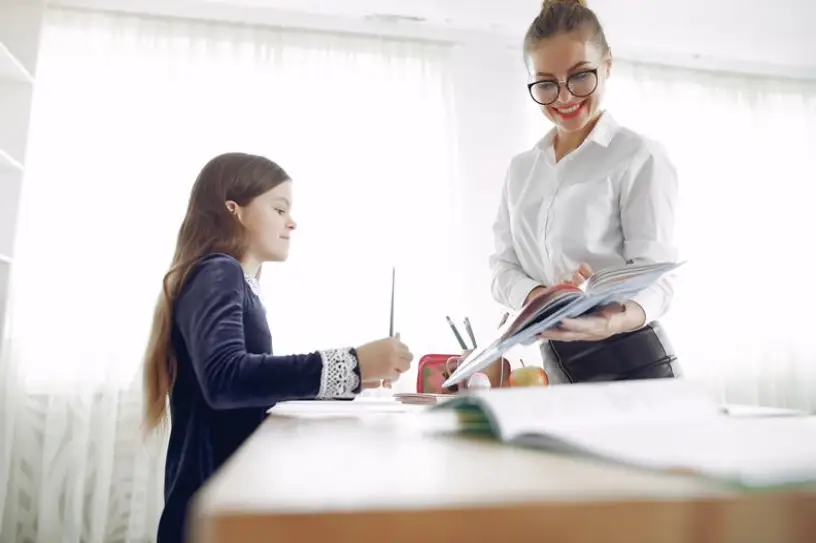
Science tuition is one-to-one, online or at home, for pupils aged 7 to 18. That includes primary science, key stage 3, GCSE combined and triple science, and A-level. Every tutor is DBS-checked and qualified. Parents receive progress reports, so you are not guessing from a weekly comment.
What the lessons actually cover
Science lessons start with the specification your school follows. We use it as a checklist, not a script. A pupil who can describe photosynthesis but cannot read a graph, convert units or explain why a control was needed will lose marks in the required practical questions, even when the biology content is secure. That is why we teach the content, required practicals and maths skills together. The maths is not an add-on. It includes significant figures, unit conversions, rearranging equations, gradients, ratios and percentages.
We also teach exam language. Command words such as state or explain ask for different answers. Mark schemes reward the right number of points and the correct units. Pupils often know the science and still drop marks because they wrote a paragraph when the question wanted two lines.
Primary and key stage 3
For pupils aged 7 to 11, science is often about curiosity and vocabulary. We use simple investigations and everyday examples, and we talk through what a fair test means. At key stage 3, we build the habits that GCSE demands: definitions, diagrams, units and a clear method. We do not turn every lesson into a past paper at this age. A Year 8 pupil who learns to label a diagram properly and give a unit every time is already ahead of many peers.
GCSE combined and triple science
GCSE is where the difference between combined and triple science matters. Combined pupils cover core content and the required practicals. Triple pupils meet extra content and more maths. We check which route your child is on before we plan. We then work through the specification, the practicals and the exam questions that combine them. A lesson might start with a past paper question, go back to the underlying idea, and finish with a similar question done without help.
A-level
A-level science is not GCSE with harder numbers. In biology, we work on mechanisms and the language of explanation. In chemistry, we spend time on equations and moles, plus practical reasoning. In physics, we look at the steps between a formula and an answer. We also cover the practical questions and the maths skills in the specification. If a pupil is resitting, we start from the mark schemes and the topics that caused the most damage.
Who it suits, and who it does not
This suits a pupil who has gaps from a disrupted year, a pupil who understands the content but loses marks on practicals, and a pupil who needs a steady weekly routine before GCSE or A-level. It also suits a family who wants one-to-one lessons online or at home, with a tutor who is DBS-checked and qualified.
It does not suit a family who wants a large group class or a recorded course. We do not run either. If your child is confident in a group and you want the lowest cost per hour, a group class may be the better buy. If you want someone to watch how your child reads a graph and correct the habit in the moment, one-to-one is different. Nor do we promise a grade. We promise teaching and feedback, and progress reports for parents.
How it works, step by step
First, we ask about the year group, the specification, the exam date and the tier. We ask what the school reports say and what your child finds hardest. Then we run a short diagnostic in the first lesson. It is not a test for its own sake. We use it to see how your child reads a question and sets out a calculation, and how they explain a practical. After that, we agree a plan with clear topics and a review point.
Each lesson is one-to-one. Online lessons use a shared screen, a camera and a microphone. Home lessons use the same materials at your table. We ask for the specification, the exercise book, any past papers and a calculator before the first lesson. We bring a plan, worked examples, exam questions and a review sheet. Between lessons, we set a small amount of work. It should be short enough to finish and specific enough to teach us something.
Progress reports for parents go out at agreed points. They cover what we have covered, what has improved, what still needs work and what comes next. We do not fill them with grades we cannot verify. We describe the pupil's habits, their errors and the next step. If something is not working, we say so and change the plan.
What to prepare or bring
For online lessons, you need a stable connection, a camera, a microphone, a calculator and a notebook. A printed specification helps. For home lessons, the same list applies, plus a table and good light. If your child has a school exercise book, keep it nearby. The teacher's marking often tells us more than a general comment at parents' evening.
We prepare the teaching. You do not need to buy a course or a bundle of books before the first lesson. If a revision guide is useful, we will say which kind and when. We also ask for the exam board and the tier. A pupil entered for higher tier needs different practice from a pupil on foundation tier, even in the same class.
What affects the timing and the price
Fees are on request. Ask for the current fee when you book. The fee depends on the level, how often you book and whether lessons are online or at home. We confirm availability when you book. We do not publish opening hours because lessons are arranged around your timetable and the tutor's.
Timing depends on the starting point, the exam date and the subject. A pupil starting in Year 10 has more room to rebuild than a pupil starting after the February mocks. A pupil who missed practical work needs more time than one who only needs exam technique. The number of lessons also depends on how much practice happens between sessions. We review the plan as the exam gets closer.
Science tuition compared with the alternatives
DIY revision is cheaper. A revision guide and free videos can cover a lot of content. The gap is feedback. No one marks the answer, spots the missing unit or explains why the graph is wrong. A parent can help with encouragement, but most parents do not know the mark scheme for the current specification. That is not a criticism. Specifications change.
A group class gives pupils a room and a teacher. It can work well for a confident pupil who asks questions. It is less useful for a pupil who hides confusion in a group or needs a different pace. Online platforms offer worksheets and recorded lessons. They are good for practice. They cannot watch a pupil pause at a practical question and ask the question that unlocks it.
Doing nothing is also a choice. Science is not a memory test. Gaps in key stage 3 show up in GCSE, and gaps in GCSE show up at A-level. Waiting can mean more lessons later. It may still work, but the plan changes. We would rather tell you that at the start than after a mock.
Our difference is the format and the follow-up. Lessons are one-to-one, online or at home. Tutors are DBS-checked and qualified. Parents get progress reports. We use the specification and the required practicals, not a generic workbook. That combination is what you are paying for.
Questions parents ask
Do you teach combined and triple science?
Yes. We teach both routes at GCSE, and we check the tier before planning. We also teach key stage 3 and A-level science. If your child is in primary school, we keep lessons practical and talk-based.
Can lessons be online or at home?
Yes. One-to-one lessons are available online or at home. We agree the format before the first lesson. For home lessons, we ask for a table and a quiet space. For online lessons, a camera and microphone help.
How do you report progress?
We send progress reports for parents at agreed points. They describe what has been covered, what has improved and what still needs work. We also talk through the next step at the end of a block of lessons.
What if my child is preparing for exams?
We start with the exam date and the specification. Then we build a plan around the papers and the required practicals. We use past questions, but we do not drill them without teaching the underlying idea. Ask when you book about availability for the weeks before exams.
Do you promise a grade?
No. We do not promise a grade or a score. We provide teaching, feedback and progress reports. The pupil's work between lessons matters. If the plan is not working, we change it.